Alignment lines on a yoga mat help synchronize hands and feet with your movements, supporting safer practice and better form. Below are five top mats with built-in guides, designed for at-home sessions, studios, and travel. Each option emphasizes non-slip surfaces, cushioning, and durable construction to support a wide range of poses and intensities.
| Product | Brand | Key Features |
|---|---|---|
| YOGATI Yoga Mat with Alignment Lines | YOGATI | Non-slip surface, large cushioning, alignment lines |
| Gruper Non-Slip TPE Yoga Mat with Alignment Mark | Gruper | Double-layer, durable grip, alignment system |
| Heathyoga Eco Friendly Alignment Yoga Mat | Heathyoga | Eco-friendly TPE, alignment lines, 6mm cushioning |
| Ascend Yoga Mat with Alignment Marks | Sunshine Yoga | 6mm thickness, reversible, printed alignment marks |
| Ewedoos Eco Friendly Alignment Yoga Mat | Ewedoos | Three-layer structure, dual non-slip surfaces |
Note: Each mat is designed to support alignment-focused practice across yoga, Pilates, and floor workouts. The following sections present five detailed options, with an objective look at materials, grip, thickness, and ease of transport.
YOGATI Yoga Mat With Alignment Lines

The YOGATI mat offers a balanced combination of comfort and guidance. Its cushioning supports joints during longer sessions, while a non-slip surface provides reliable grip through dynamic poses. Alignment lines help users position hands and feet accurately, aiding posture corrections during yoga and Pilates. The mat is described as lightweight and wide, suitable for home workouts, gym sessions, and travel with a carry strap included. With non-toxic materials, it aims to minimize slippage and distractions during practice.
Gruper Non-Slip TPE Yoga Mat With Alignment Mark

Gruper’s mat emphasizes a durable, double-layer structure designed to resist tearing while maintaining a strong grip. The surface features an alignment system to position hands and feet accurately, which is particularly helpful for solo practice in home studios or gym spaces. The mat is constructed from non-toxic, odorless TPE and includes a carry bag and strap for easy portability. Users can expect a firm yet cushioning surface that supports a range of yoga modalities and floor workouts.
Heathyoga Eco Friendly Non Slip Yoga Mat with Alignment Lines
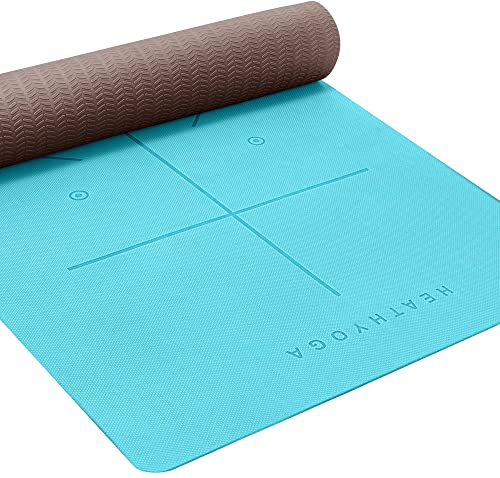
Heathyoga emphasizes eco-friendly materials with SGS-certified TPE, offering a no-latex, odor-free surface with dual-sided non-slip textures. The 6mm thickness provides solid cushioning, while the alignment lines help track pose accuracy and ensure proper form during routines. The mat’s construction aims to minimize injuries by encouraging correct alignment, making it suitable for beginners and seasoned practitioners alike.
Ascend Yoga Mat with Alignment Marks – Sage Haven

Ascend’s mat combines a durable double-layer design with a 6mm thickness and alignment marks printed for hands and feet positioning. The mat is reversible, offering multiple textures for grip and stability. Its 72 by 24 inches provide ample space for movement, making it suitable for Pilates, floor work, and studio-style routines. The non-slip surface and tear resistance contribute to long-term usability in busy practice environments.
Ewedoos Eco Friendly Yoga Mat With Alignment Marks

Ewedoos offers an eco-conscious three-layer TPE mat with alignment marks to guide posture. The surface features dual non-slip textures on each side, aiming to prevent hands and feet from sliding during vigorous movements. Its breathable, odor-free composition aligns with sustainable practice without sacrificing cushioning or durability, making it suitable for ongoing daily use in homes and studios.
Buying Guide: Key Considerations For Alignment-Marked Yoga Mats
- Material and Eco-Friendliness: Look for non-toxic, latex-free TPE or cork components when possible. Eco-friendly mats tend to reduce odor and skin irritation over time.
- Thickness And Cushioning: Common ranges are 6mm to 8mm. Thicker mats provide more joint protection but can be heavier to transport; thinner mats save space but may offer less comfort for sensitive joints.
- Alignment Lines Clarity: Consider the visibility and spacing of alignment marks. Clear guides help with accuracy, especially for beginners learning pose placement.
- Non-Slip Performance: A stable grip on both sides of the mat matters for dynamic sequences and sweaty sessions. Mats with double-sided textures can offer longer-lasting traction.
- Durability And Tear Resistance: A durable mat withstands regular bending, rolling, and cleaning without tearing, preserving alignment structures over time.
- Size And Portability: Dimensions like 72″ x 24″ are common and provide ample room. Carriers, straps, and weight influence travel convenience.
- Maintenance: Choose mats that are easy to wipe clean and resist absorbing moisture to maintain hygiene during multi-user environments.
- Intended Use: Consider whether the mat is designed for yoga, Pilates, or mixed-floor workouts; some models emphasize studio-grade stability, while others prioritize travel readiness.
When selecting a mat, compare the alignment system, feel of the surface, and how well the materials align with your practice goals. For beginners, a mat with clear guides and gentle cushioning can aid in learning proper form. For experienced practitioners, durability, grip, and surface texture may take precedence to support advanced sequences and longer sessions.