Finding the right tennis ball machine can elevate practice sessions, helping players of all levels build consistency, rhythm, and shot variety. The following five options from Sports Tutor Store cover a range of speeds, spins, and portability, making it easier to choose a model that fits your training goals, space, and budget. This guide summarizes key features and provides a practical buying guide to compare models side by side.
| Product | Top Feature | Ideal For |
|---|---|---|
| Sports Tutor Tennis Twist Ball Machine | Adjustable toss; ball and pickleball compatibility | Beginners to intermediate players seeking variety |
| Tennis Tutor Prolite Plus | One-Touch Topsin; 75 MPH; built-in oscillator | Players needing fast, varied feeds with simple controls |
| Sports Tutor eCannon | TOPSPIN; lightweight transport; two-button operation | Intermediate to advanced players who value portability |
| Tennis Tutor Plus Player | Multi-Function Remote; Player Mode; topspin/underspin | Players seeking realistic ball behavior and remote control |
| Tennis Tutor Prolite Ball Machine with Remote | Remote control; random oscillator; portable | Traveling players and those needing easy remote operation |
Sports Tutor Tennis Twist Ball Machine

The Tennis Twist from Sports Tutor Store is designed for beginners seeking a versatile practice partner. It offers adjustable toss distance from 12 to 20 feet and a ball feed interval of five seconds, ensuring steady rhythm without constant manual feeding. This model supports regular tennis balls and oversized options, including pickleballs, expanding training possibilities. Built with user-friendly operation in mind, it suits backyard courts, clubs, and light coaching environments where predictable feeds are essential for skill development.
Key considerations include its portability, battery-powered operation, and the ability to handle different ball types. For newcomers, consistent feeds help build stroke mechanics, footwork, and timing without needing a partner. The adjustable range allows players to work on both groundstrokes and volleys by varying the distance. While not the fastest machine on the market, its simplicity and flexibility make it a reliable entry point for solo practice sessions.
Tennis Tutor Prolite Plus Ball Machine

The Prolite Plus emphasizes ease of use and speed control. With straightforward knob controls, players can select ball speeds from 10 to 75 MPH and tune shot types from groundstrokes to lobs. The integrated topspin button adds a moderate topspin to chosen shots, enhancing practice realism. Built in the USA by a leading tennis machine company, this model is well-suited for players who want quick setup, reliable performance, and a broad speed range for progressive drills.
Consider this model if you value minimal setup, a broad speed spectrum, and the ability to simulate competitive rallies. The built-in oscillator helps create a more dynamic practice flow, replicating the unpredictability of real matches while still offering repeatable drills for form refinement. Its compact footprint also makes it a good fit for smaller courts or clubs with limited space.
Sports Tutor eCannon Tennis Ball Machine with TOPSPIN
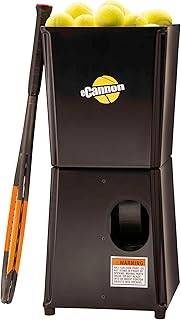
The eCannon is a compact option designed for intermediate and advanced players who seek portability without sacrificing performance. It weighs only 23 pounds, making it easy to transport and store. The TOPSPIN feature and simple two-button operation keep setup straightforward while offering reliable spin control. This model targets players who want a more realistic practice feel in a lighter, more manageable package, suitable for small courts, clinics, or personal use at home.
Operate with confidence in varied training scenarios, from flat drives to heavy topspin or slice. While its weight emphasizes portability, it still provides solid ball feeds at customizable speeds, making it an attractive option for players who travel or need a quick setup between drills. The lightweight design does not compromise on practical functionality, making it a strong contender for frequent, on-the-go practice sessions.
Tennis Tutor Plus Player Ball Machine
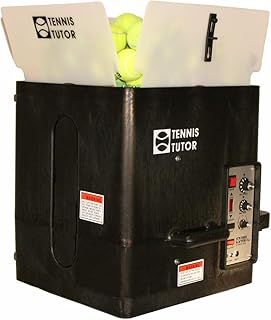
The Plus Player model stands out with a multi-function remote and a patented Player Mode that simulates a real opponent. It supports a wide range of ball speeds from 10 to 85 MPH and offers shot selection from groundstrokes to lobs, with electronic elevation to adjust trajectory. The TOPSPIN and UNDERSPIN indicators help players visualize spin levels on the display, aiding technique training. The ball feed interval is adjustable from quick volleys to slower, longer rallies.
For players who want a more immersive solo practice experience, the Player mode provides a realistic feel without a hitting partner. The remote adds convenience for adjusting drills mid-session, which can be valuable for structured practice plans, footwork ladders, and shot-specific repetitions. While feature-rich, this model remains user-friendly, making it suitable for dedicated solo practice and coaching environments.
Tennis Tutor Prolite Ball Machine with Remote

The Prolite with Remote combines speed flexibility and portability for convenient solo practice. It offers ball throws in the 10 to 70 MPH range, a newer high-speed setting for models with the remote, and a versatile shot selection slate from groundstrokes to lobs. The ball feed interval is adjustable between quick volleys and longer rallies, enabling varied training drills to target timing, rally consistency, and shot selection. A built-in random oscillator adds randomness to practice sessions for a more game-like feel.
This model is well-suited for players who travel to practice or value a compact unit that can be towed like luggage. The remote control adds convenience when adjusting drills without interrupting the flow of practice. It provides a balance between portability, ease of use, and useful features that support progression from fundamentals to more complex rally patterns.
Buying Guide
Choosing the right tennis ball machine depends on your goals, skill level, space, and budget. Consider the following factors to guide your decision:
- Purpose and Skill Level: Beginners benefit from simpler machines with steady feeds and adjustable distance. Intermediate and advanced players may require higher speeds, topspin options, and programmable drills to simulate match conditions.
- Speed Range and Spin: Look for models offering a broad MPH range (roughly 10–85 MPH) and spin controls (topspin, backspin, or both). This affects your ability to practice varied strokes and rally patterns.
- Feed Interval and Customization: The interval between balls controls your rhythm. Short intervals enable fast reaction drills; longer intervals are better for practicing endurance and shot accuracy.
- Oscillator and Elevation: An oscillator spreads balls across the court to mimic real ball trajectories, while adjustable elevation allows you to simulate lobs and different court angles.
- Portability and Weight: If you travel or have limited storage, lighter models with remote controls and simple setup are advantageous. Heavier models may offer more features but require more space.
- Remote Control vs. Manual: Remote control can streamline drills, especially in solo practice. Consider whether the extra cost aligns with your training needs.
- Maintenance and Warranty: Check for easy maintenance, availability of replacement parts, and factory warranty to ensure long-term reliability.
- Compatibility: If you play with different ball types (regular tennis balls, oversized balls, or pickleballs), ensure the machine supports those options.
Practical side-by-side considerations help identify the best fit. If you’re new to solo practice, a straightforward model with adjustable distance and simple controls is ideal. For players seeking realistic spin and more complex drills, models with topspin/underspin capabilities, remote control, and broader speed ranges provide greater training variety. Always verify that the machine’s size and weight suit your space, and assess whether you value portability for travel or club usage. A model with an oscillator and random feed patterns tends to deliver a more game-like practice experience, especially for baseline rally development and shot anticipation.