For athletes building a versatile home gym, a combination squat stand, rack, or cable tower can unlock a wide range of exercises—from squats and bench presses to cable flyes and triceps extensions. This guide highlights five sturdy, space‑efficient options that blend durability, safety, and adjustable functionality. Each pick is evaluated for load capacity, attachment options, and footprint to help you choose the best fit for your space and training goals.
| Product | Brand | Key Strength | Typical Use |
|---|---|---|---|
| CAP Barbell Power Racks and Attachments | CAP Barbell Store | Heavy‑duty construction; 500 lb capacity | Squats, bench press, pull‑ups, attachments |
| Pull Up Bar Power Tower Dip Station | pooboo Store | Integrated pull‑up bar and cable system; compact | Full‑body strength, multiple height adjustments |
| Garvee Power Cage | Garvee Store | Up to 2000 lb capacity; versatile cage with pulley system | Squats, pulls, rows, cable work |
| Cable Tower Bells of Steel | Bells of Steel Store | 3×3 frame; plate‑loaded or 210 lb stack option | Pulls, presses, rows, multi‑gym movements |
| Marcy Strength Training Cage | MARCY Store | Adjustable catches; built‑in weight storage | Bench, squat, pulley work, full‑body routine |
CAP Barbell Power Racks and Attachments

The CAP Barbell rack combines a sizable footprint with robust steel tubing, designed to support demanding lifts beyond basic squats. Key dimensions are 46 inches wide by 50 inches deep and 85 inches tall, with a total weight of about 59.5 pounds. It accepts 2‑inch Olympic barbells, plates, and CAP attachments, enabling a customizable home gym setup. The unit features J‑cup catches, a built‑in pull‑up bar, and weight storage posts, plus double‑gusseted uprights for enhanced stability during heavy work. It supports up to 500 pounds, suitable for bench pressing, squats, and more.
This rack is compatible with additional attachments to expand workout variety, such as safety spotter arms, landmine attachments, and dip bars. Its durable construction adheres to standard testing for reliability, making it a solid cornerstone piece for a versatile strength routine in a home gym.
Pull Up Bar Power Tower Dip Station, Cable Machine

This integrated unit combines a pull‑up bar with a cable machine system, delivering space efficiency for compact home gyms. Its footprint is about 11.65 square feet, leaving room for other equipment while enabling a wide range of compound movements. Height adjustments for the pull‑up bar and cable sections facilitate multi‑user setups, offering several levels to accommodate different physiques and training preferences.
Workout versatility includes pull‑ups, chin‑ups, dips, vertical knee raises, push‑ups, leg extensions, and cable flyes or rowing moves. The dual‑function design reduces the need for separate towers or machines, helping users maximize training variety in a smaller space without compromising stability or safety.
Garvee Power Cage

The Garvee Power Cage emphasizes a high weight capacity and multifunctional design, making it suitable for intense home gym setups. It functions as a power cage with a built‑in pulley system and a wide array of exercises, including squats, bench presses, pull‑ups, cable movements, and rows. The cage footprint is designed to balance compactness with stability, accommodating a robust squat or bench station while offering multiple height adjustments and a ladder of exercise options.
Construction uses carbon steel tubing with a 2000‑pound rating to meet durability needs for heavy lifters. The lower footprint and efficient layout help home gyms optimize space while providing the versatility of a full cage system, including smooth pulley movements and multiple anchor points for attachments. Users can mix traditional free weights with cable‑based resistance for varied programming.
Cable Tower Bells of Steel
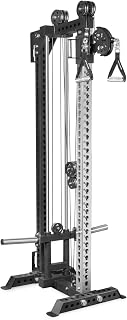
The Bells of Steel cable tower offers flexibility with a 3×3 frame design and a choice between plate‑loaded or a 210‑lb weight stack. A 2:1 pulley ratio provides a challenging load with smooth, controlled movements. Laser‑cut height adjustments and numbered keyholes enable repeatable setups even during intense supersets, saving time and reducing setup friction.
Designed for garage or compact spaces, this tower can mount to the floor or wall or pair with compatible Hydra or Manticore accessories. The kit’s core strength lies in modularity and future‑proofing, letting users adapt as training needs evolve while maintaining a sturdy resistance system for rowing, pressing, and isolation moves.
Marcy Strength Cage With Pulley System

The Marcy strength cage combines a squat and bench setup with a multi‑plane pulley system, designed for comprehensive full‑body workouts. It features adjustable bar catches to accommodate bench presses and squats, enabling safe barbell transitions during different movements. The system includes high and low pulleys to broaden exercise options across chest, back, shoulders, arms, and core.
Built‑in weight plate storage helps keep equipment organized, and the included weight trolley supports up to 150 pounds, aiding efficient workout transitions. This cage supports a wide range of training modalities, from classic compound lifts to modern pulley‑driven resistance, making it a versatile centerpiece for a home gym that prioritizes space efficiency and function.
Buying Guide: Key Purchase Considerations
When selecting a squat stand, rack, or cable tower, consider safety, space, and training goals. Weight capacity should align with your heaviest anticipated lifts, plus a safety margin for dynamic movements. Stability features such as reinforced uprights, thick gauge steel, and wide bases reduce wobble during heavy sets. Look for adjustable height options to accommodate different body sizes and exercise variations, and evaluate compatibility with future attachments like dip bars, landmines, or additional pulley systems.
Footprint and layout are critical for home setups. Measure available space and consider ceiling height to ensure comfortable clearance for overhead movements. Some units offer foldable or modular designs that maximize space when not in use. Cable towers and multi‑entry racks can save space by combining several functions in one frame, but ensure the assembly quality and anchoring method are robust for long‑term use.
Versatility matters for value. A system that supports a range of exercises—from bench work and squats to pull‑ups and cable movements—will deliver more training options without requiring multiple standalone machines. Maintenance, warranty coverage, and ease of attachment installation also influence long‑term satisfaction. Finally, assess whether the unit is compatible with common Olympic plates and bars to ensure a smooth integration with existing equipment.
In sum, choose a configuration that offers strong construction, adequate load capacity, and flexible attachments. A well‑chosen squat stand or cable tower can support progressive strength training across years of use, while preserving space and safety in a home gym environment.