Portable pitching machines offer a convenient way to sharpen hitting, fielding, and reaction skills without chasing a live pitcher. Below are five top options that balance portability, ease of use, and realistic pitching for both baseball and softball training. Each product section highlights what to expect, suitable use cases, and standout features to help you compare quickly.
| Product | Brand | Key Feature |
|---|---|---|
| Louisville Slugger Blue Flame Pitching Machine | Louisville Slugger | Highly versatile with multiple ball types and adjustable speeds |
| PowerNet Launch F-lite Baseball & Softball Pitching Machine | PowerNet | Two sports in one with adjustable height and 40–90 MPH speeds |
| Furlihong Upgraded Electronic Baseball Pitching Machine | Furlihong | Adjustable angles and speeds; battery or AC operation |
| Personal Pitcher Pro Pitching Machine | Personal Pitcher | Compact design; throws curveballs, sliders, and fastballs |
| MOXOW Sagitta Baseball & Softball Pitching Machine | MOXOW | Sturdy, stable, and anti-tilt with easy transport |
Louisville Slugger Blue Flame Pitching Machine
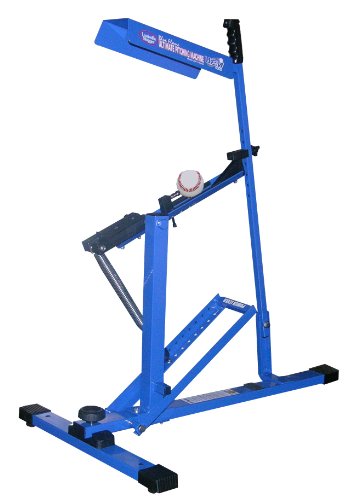
The Louisville Slugger Blue Flame offers broad compatibility, throwing various ball types from hard baseballs to softballs, dimple balls, light flight, and even plastic balls, plus soccer and volleyballs. It uses adjustable speed controls to deliver fast pitches from 18 to 45 mph and lighter pitches up to 60 mph for practice with different bat sizes and swing types. It provides reliable strike accuracy for steel-to-bat timing, making it suitable for solo drills or small-group sessions in driveways or backyards.
PowerNet Launch F-lite Baseball & Softball Pitching Machine

The Launch F-lite is designed for both baseball and softball, with interchangeable tripod bases to adjust pitch height. It includes 12 launch balls and offers speeds from 40 to 90 mph at 25 feet with four settings. This model is ideal for coaches and parents conducting batting practice on fields or at home, delivering consistent strikes and enabling fielding drills such as pop-ups and line drives—the setup supports varied practice scenarios and helps build muscle memory.
Furlihong Upgraded Electronic Baseball Pitching Machine
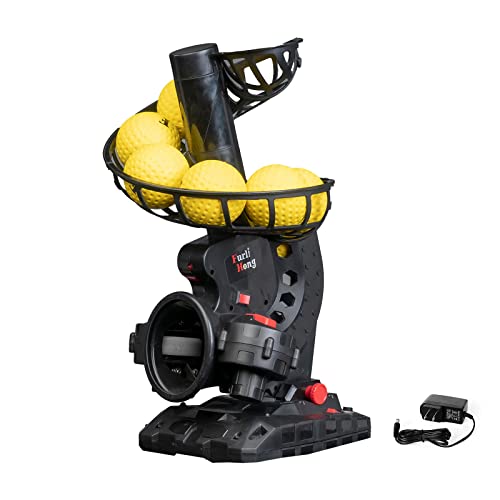
This Furlihong model provides adjustable angles and speed, with AC adapter or battery power for flexibility. It runs on four D batteries (not included) or the included 6V AC adapter. The max speed is 30 mph and it uses polyurethane dimpled balls designed for sting-free contact. It’s portable enough for indoor or outdoor use and is compatible with various pitch types, supporting beginners through intermediate players in controlled practice sessions.
Personal Pitcher Pro Pitching Machine

The Personal Pitcher Pro focuses on home or field use with a compact design and 48 golf-ball-sized practice balls included. It throws a mix of curveballs, sliders, and fastballs to challenge timing and mechanics. Its compact footprint makes it easy to transport and store, enabling quick setup for both batting practice and fielding drills in limited spaces.
MOXOW Sagitta Baseball & Softball Pitching Machine

The MOXOW Sagitta emphasizes stability and portability with a dual-function beam for easy transport and an anti-tilt structure that keeps pitches on target. It’s designed for realistic baseball and softball training, delivering consistent pitches suitable for batting and fielding practice. The robust build supports use across skill levels, from beginners to more advanced players, and its portable design makes it a practical choice for field sessions or backyard setups.
Buying Guide: Key Purchase Considerations
- Intended use: Match the machine to baseball or softball emphasis. Some models offer dual-sport compatibility, while others are optimized for one.
- Portability and setup: Consider weight, handle design, and how quickly you can set up and break down for on-field drills or backyard use.
- Pitch range and speed: Evaluate the top speeds and pitch types (fastball, curveball, slider, etc.) to align with your training goals and opponent difficulty.
- Power options: Some machines run on AC power, others use batteries. For indoor use, battery-powered or AC-adapter options provide flexibility.
- Ball compatibility: Ensure the supplied or compatible balls (standard baseballs vs. training balls) suit your practice plans and bat compatibility.
- Durability and safety: Look for stable bases, anti-tilt designs, and materials that withstand frequent use and transport.
- Accessories: Check included extras like extra balls, tripods, or ball caddies, which can enhance training value and reduce extra purchases.
- Maintenance: Consider ease of cleaning, part availability, and warranty options for long-term use.
Across these options, users should evaluate how each machine supports routine practice goals—whether focusing on fast-twitch reaction, swing mechanics, pitch variety, or fielding drills. For families or teams, factor in portability, storage space, and the ability to run sessions at various venues. In all cases, choosing a model with adjustable speeds, reliable feeds, and robust construction helps ensure consistent training outcomes and safer usage for players at different levels.