Choosing the right neck brace can help reduce the risk of neck and collarbone injuries during off-road rides. This guide highlights top options designed for mountain biking, covering how they work, who they’re best for, and key features to compare. The selections below focus on multiple sizes, materials, and fit strategies to suit varying rider ages and body types.
| Product | Brand | Key Benefit |
|---|---|---|
| Leatt Neck Brace 5.5 #S/M Blk | Leatt | High-level cervical protection with adaptable fit |
| Leatt Neck Brace 5.5 #L/XL Blk | Leatt | Extended size for improved coverage and comfort |
| Atlas Brace Tyke Neck Brace (Black) | Atlas Brace | Youth-friendly split-flex frame with Mimic technology |
| Atlas Brace Tyke Neck Brace (White) | Atlas Brace | Same youth-focused protection in a lighter color option |
| Leatt Neck Brace 3.5 #L/XL Black | Leatt | Proven neck protection with adjustable fit |
Note: This article avoids pricing and focuses on safety features, fit, and protection levels to help you choose the best option for mountain biking disciplines and rider profiles.
Leatt Neck Brace 5.5 S/M Black

The Leatt 5.5 S/M Black is engineered to reduce neck forces during a crash by transferring load away from the neck bones. It claims up to 89% reduction in critical cervical spine injuries and notes that collarbone injuries are more likely without a neck brace. Features include a collarbone cut-out to keep helmet rim clear, a CoreFlex split rear folding strut designed to break away under excessive pressure, adjustable front and rear sliders for a precise fit, a composite matrix platform for force reduction, and a sculpted front for comfort. This model emphasizes rider safety across a broad weight and height range with an emphasis on secure helmet interaction.
Leatt Neck Brace 5.5 L/XL Black
This larger size Leatt 5.5 L/XL continues the same protective philosophy with an extended fit to cover bigger frames. It transfers loads away from neck bones, claims substantial reductions in cervical spine injuries, and maintains helmet clearance through an engineered collarbone cut-out. Adjustable front and rear sliders enable a personalized fit, and the split rear folding strut is designed to release under heavy pressure to minimize back loading while maintaining posture and protection during rides.
Atlas Brace Tyke Neck Brace (Black)
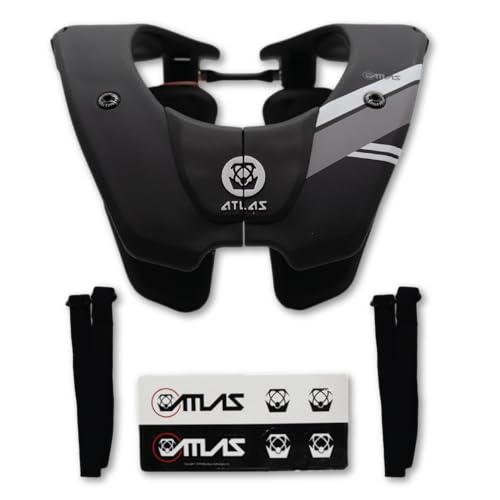
The Atlas Tyke Neck Brace for young riders introduces a patented Split-Flex Frame with Mimic Technology to enhance range of motion and comfort while delivering neck protection. Its Multi-Impact Tough Polymer Construction is designed to withstand repeated impacts for long-lasting safety. A 30mm Chest Suspension supports more natural movement, reducing injury risk during high-impact activities. This model is tailored for youth participants who require protective gear with a lighter build and flexible fit.
Atlas Brace Tyke Neck Brace (White)

This white variant of the Atlas Tyke continues the youth-focused protection with the same Split-Flex Frame and Mimic Technology. It emphasizes comfortable motion and impact resilience in a lighter, child-friendly build. The 30mm chest suspension remains a core feature, enabling a natural tuck-and-roll response during fall scenarios while reducing neck strain and preserving movement.
K1 Race Gear Neck Protector Brace (Adult)

The K1 Race Gear neck protector is an adult option offering basic stabilization with a compact package. The listing emphasizes general protection and sizing details, including a focus on accommodating adult riders who prefer a streamlined profile. It provides essential neck protection for riders who want a lighter brace without heavier armor features.
Leatt Neck Brace 3.5 L/XL White

The Leatt 3.5 L/XL White offers independently lab- and rider-tested protection, transferring loads away from the neck during crashes. It advertises up to 89% reduction in severe cervical injuries, with a note that collarbone injuries are more likely without a neck brace. This model provides a balance of protection and lighter weight with adjustability to tailor fit for various body types and riding styles.
Leatt Neck Brace 3.5 L/XL Black

This Leatt 3.5 Black model reiterates independent testing and protective claims, highlighting neck support through load transfer during crashes. It mirrors the 89% reduction claim for critical cervical injuries and notes collarbone injury risk without protection. The design emphasizes secure fit, adjustability, and comfort for longer mountain bike sessions or aggressive rides.
Buying Guide: Key Purchase Considerations for Mountain Bike Neck Braces
- Rider size and fit: Choose a size that properly covers the neck and leaves room for helmet movement without restricting breathing or range of motion. Many brands offer specific S/M and L/XL options to accommodate different frames and ranges of motion.
- Protection level: Look for braces that emphasize cervical spine protection and collarbone safety, as indicated by independent testing and rider studies. Higher protection levels may increase weight, so balance protection with comfort.
- Mobility vs. stiffness: Splits, flexible frames, and rear struts impact mobility. If you ride technical trails, prioritize braces that allow a natural tuck and roll while still offering load transfer during impacts.
- Weight and ergonomics: Lighter braces reduce fatigue on long climbs, but ensure the product remains sturdy enough for high-impact landings. Check chest suspension features and how they contribute to natural movement.
- Adjustability and ease of use: Quick-release or simple adjustment systems help you achieve an optimal fit on the trail. Ensure you can tighten or loosen the brace without removing your helmet.
- Age suitability: Some designs are explicitly youth-oriented with lighter materials and smaller frames, while others target adults. Parents should verify size recommendations for younger riders.
- Maintenance and durability: Consider polymer or composite materials and the expected lifespan under repeated impacts. A durable brace reduces replacement frequency after rides or crashes.
- Compatibility with gear: Ensure the neck brace integrates with your helmet, chest protector, and jersey without obstructing movement or chin guard clearance.
- Certification and testing: Independent testing claims provide confidence. Look for documented data from credible sources to support protection claims.
Choosing the right neck brace involves evaluating fit, protection level, and riding style. For riders who frequently tackle rocky descents, larger protection with adjustable features may be preferable. For younger riders or those prioritizing mobility, youth-focused models with flexible frames can be more appropriate. Always ensure proper sizing and consult product guides or customer support if you’re between sizes.