If you’re planning long rides on rugged trails, the right saddle can make or break your day. This guide highlights five top trail saddles designed for comfort, support, and smoother handling on varied terrain. Each option balances padding, shape, and materials to reduce pressure and improve stability. Read on to compare fit, padding levels, and ergonomic features that support longer rides without numbness or fatigue.
| Product | Brand | Key Benefit |
|---|---|---|
| WTB Pure Mountain Bike Seat | WTB Store | Extra padding for all-day comfort |
| WTB Volt Bike Seat | WTB Store | Contoured support with multiple widths |
| FIFTY-FIFTY Mountain Bike Saddle | FIFTY-FIFTY Store | Memory foam comfort with waterproof design |
| YLG Oversized Comfort Bike Seat | YLG Store | Extra-wide profile with dual-spring stability |
| Wittkop Bike Seat | Wittkop Store | 5-zone ergonomic design with airflow |
WTB Pure Mountain Saddle: Classic Comfort For All-Day Rides

The WTB Pure Mountain Seat embodies a classic drop-nose design that faithful riders recognize as part of the brand’s heritage. It offers extra padding to support long days on mountain paths or bikepacking trips. The saddle’s shape aims to distribute weight evenly across sit bones, reducing hotspot pressure while maintaining control on uneven terrain. Its all-day comfort profile makes it a reliable choice for riders who value endurance and consistent support on mixed surfaces.
Key features include a thick, cushioned core that absorbs road and trail chatter and a design that prioritizes stability for aggressive climbs and long descents. While primarily designed for mountain adventures, its padding and durability also translate well to extended gravel journeys. The Pure’s padding and classic silhouette balance comfort with the efficiency needed for persistent pedaling over diverse routes.
WTB Volt Saddle: Contoured Comfort For Varied Terrains

The WTB Volt Saddle emphasizes a balanced approach to comfort and performance. With medium padding thickness, it blends soft cushioning with firm support to keep you comfortable during slower, more controlled paces or long, steady climbs. The deeply contoured shape cradles the pelvis, helping stabilize the rider and reduce fatigue on longer rides. Available in multiple widths, Volt ensures a precise fit to support proper power transmission across different sit bone anatomies.
Riders who prioritize fit autonomie will appreciate the range of width options, which helps avoid pressure zones and supports efficient pedaling. The Volt’s design focuses on stability and comfort for Trail to Gravel sessions, enabling smoother experiences across varying terrains without sacrificing control or posture.
FIFTY-FIFTY Mountain Saddle: Lightweight, Waterproof, Memory Foam
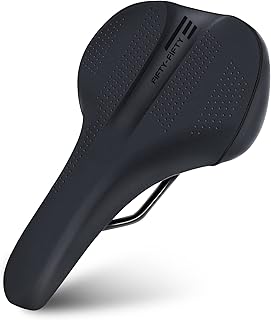
This saddle combines memory foam comfort with a waterproof surface, making it well-suited for all-weather trail riding. The ergonomic shape supports sit bones while the flexible wings and rear edges minimize rubbing against inner thighs. A lightweight construction aids performance, helping riders maintain speed and stamina on longer sections of trail. The memory foam adapts to body contours, ensuring consistent comfort across varied temperatures and terrain.
It’s designed for riders who want reliable comfort without adding excessive weight. The breathable, water-resistant surface keeps you drier on wet days, and the compact profile supports efficient pedaling. If you’re seeking dependable all-weather comfort for trail rides and mixed-terrain commutes, this saddle offers a strong balance of cushion and practicality.
YLG Oversized Comfort Bike Seat: Wide, Cushioned Support

The YLG oversized saddle prioritizes a broad, supportive profile. Its 13-inch width and 10-inch length create a roomy seating area, reducing pressure on sit bones during long rides on Peloton-style, stationary setups, or outdoor trail paths. The high-density memory foam conforms to the rider’s shape, helping distribute weight evenly and reduce fatigue in the hips and lower back. Dual springs beneath the saddle deliver enhanced shock absorption, contributing to a smoother ride over rough surfaces.
Targeted at riders who want an expansive, forgiving fit, this seat blends comfort with stability. The combination of memory foam and dual-spring suspension helps dampen impacts from roots, rocks, and chatter, allowing riders to sustain longer sessions without discomfort. It’s a practical option for riders who prioritize a generous fit and enhanced stability on mixed-terrain adventures.
Wittkop Bike Seat: Five-Zone Ergonomic Comfort

The Wittkop Bike Seat introduces a five-zone concept designed to optimize comfort across different contact areas. Each zone is tuned for pressure distribution, providing ergonomic support that can help reduce fatigue during long rides. Its memory foam layer conforms to the rider’s body, promoting decompression and consistent support, which is especially helpful for extended sessions on road, MTB, or e-bike adventures.
Airflow is enhanced by internal braces, helping manage heat and moisture during strenuous climbs and hot days. This combination of memory foam, zoning, and ventilation makes the Wittkop seat a solid choice for riders seeking a thoughtful design that prioritizes long-ride comfort and durability on diverse trails.
Buying Guide: Key Purchase Considerations For Trail Saddles
- Rider anatomy and sit bone width: Choose a saddle with appropriate width to align with your sit bones. Wide saddles reduce pressure but may feel loose if your posture is off.
- Padding density and thickness: More padding is not always better. Balance padding with a shape that supports your pelvis and back without causing knee or hip discomfort.
- Shell and weight: Lighter saddles improve climbing and acceleration, but reinforce overall durability if you ride rugged terrain. Consider a carbon-reinforced shell for strength without excess weight.
- Padding material: Memory foam offers contouring comfort, while gel or cut-out designs can reduce pressure on sensitive regions. Test for temperature tolerance and moisture management.
- Contour and nose design: A drop-nose or nose shape can affect pedaling efficiency and leg clearance. Choose a profile that suits your riding style and body mechanics.
- Shock absorption: Saddles with built-in springs or flexible rails can dampen impact in rough sections, improving endurance on long trails.
- Ventilation and moisture control: Breathable materials and airflow channels help prevent chafing and overheating during hot rides.
- Compatibility and rails: Ensure rail type and clamp compatibility with your seat post and bike frame. Rail options vary in durability and weight.
- Maintenance and durability: Waterproof or water-resistant fabrics extend life in wet conditions. Check stitching quality and material resilience for mud and grit exposure.
Choosing the right trail saddle involves assessing comfort, fit, and terrain. For riders who log long-distance days, prioritizing width fit, padding alignment with sit bones, and impact dampening can lead to more consistent performance. Consider trying a few options with return policies or trial periods to identify the best match for your typical trail conditions and riding style.