For snorkelers, divers, and underwater enthusiasts seeking compact, refillable breathing solutions, mini diving oxygen tanks offer a convenient alternative to bulky gear. This guide reviews five highly relevant models, highlighting durability, safety features, and practical use cases. Whether you’re training, exploring shallow reefs, or performing light underwater tasks, these compact tanks provide portable air supply while keeping safety in focus.
Overview of selected products:
- GOYOJO Mini Scuba Tank — DOT certified, 0.5L capacity, durable aluminum body.
- SEBiger 0.5L Pony Bottle — 200 bar (≈ 3000 psi) with corrosion-resistant aluminum and safety relief valve.
- GOYOJO 0.5L Mini Tank Dive — 5–10 minutes underwater, lightweight and portable.
- SMACO Mini Scuba Tank 1.9L — extended gauge, vest system for hands-free use.
- TUDIVING 2L Lung Tank — larger capacity, 30–45 minutes of air, CE & DOT certified.
GOYOJO Mini Scuba Tank With Snorkel Set

The GOYOJO Mini Scuba Tank is a compact, all-in-one solution designed to bridge snorkeling and underwater exploration. With a 0.5L capacity, it pairs with a full-face snorkel mask and supports shallow dives to approximately 32 feet. The aluminum construction uses 6061 aviation-grade material for durability, and the unit includes a luminous pressure gauge and safety relief valves to support cautious, user-friendly operation. The 180-degree field-of-view mask reduces fogging, ensuring a clear underwater view.
Key features include: an all-in-one diving and snorkeling setup, a durable aluminum body, and a transparent, wide-angle mask designed for easy visibility beneath the surface. This model targets recreational divers who want quick transition between snorkeling and shallow diving without bulky gear.
SEBiger 0.5L Mini Scuba Tank — DOT Certified

The SEBiger 0.5L mini scuba tank is designed for short underwater sessions and work-related dives. It holds up to 200 bar (≈ 3000 psi) and promises around 37 breaths depending on breathing rate and depth. The cylinder is crafted from 6061 aerospace-grade aluminum, featuring a triple-layer design to resist seawater corrosion. A 5K pressure relief valve provides a safety release at the threshold of 5000 psi, and a food-grade silicone mouthpiece emphasizes user safety during use. A replaceable bursting disc is required before resuming dives, underscoring the emphasis on controlled pressure management.
Practical use emphasizes lightweight portability for shallow underwater tasks, with a robust corrosion-resistant body and a focus on safety design to support quick, surface-oriented operations.
GOYOJO 0.5L Mini Tank Dive Kit

This GOYOJO 0.5L mini tank is designed for compact underwater breathing with a 5–10 minute air window. It emphasizes portability for travel-friendly use, offering a reusable pony bottle concept for training or casual underwater breathing. Notable features include a luminous instrument display on the mouthpiece, a recessed pressure gauge, and a dedicated air filtering approach to ensure breathable air. Different inflation options are available to tailor performance to use scenarios, with a maximum fill pressure of 3000 psi / 200 bar / 2 MPa. The design supports beginner to intermediate underwater breathing training and light recreational dives.
Use-case notes: compact, straightforward oxygen delivery for shorter underwater sessions, with emphasis on safety and clear pressure readouts to guide dives.
SMACO Mini Scuba Tank — 1.9L Capacity

The SMACO Mini Scuba Tank features a 1.9L capacity designed for underwater breathing in recreational and entertainment contexts. It integrates an extended pressure gauge with a hands-free vest system to monitor air supply while keeping the user untethered to a traditional scuba setup. The kit emphasizes user-friendly operation for diving, snorkeling, or rescue scenarios. Its design supports hands-free stability and straightforward air management, making it suitable for casual underwater exploration and training in controlled environments.
Highlights include a larger capacity than the smallest mini tanks, a vest-assisted secure feel, and an emphasis on ease of use for quick setup and reliable air delivery during short to moderate-length sessions.
TUDIVING-2L Lung Tank — 2L Portable Scuba Kit
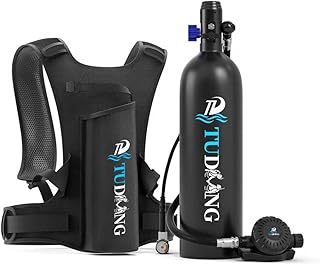
The TUDIVING 2L lung tank offers a higher-capacity option designed for longer air delivery, providing an estimated 30–45 minutes of breathable air depending on depth and breathing rate. The kit includes a regulator and a diving backpack for portability, and the aluminum construction is seawater resistant. The S700 Plus regulator, safety valve, 8mm fill port, and retractable pressure gauge emphasize professional-grade features suitable for both entertainment and underwater work. This model suits users seeking more extended underwater sessions without a heavy, full-size scuba system.
Practical considerations: larger capacity with a compact form, robust safety features, and a kit that supports longer underwater activities while remaining portable and manageable for travel.
Buying Guide
- Intended use: Consider whether you need short, quick snorkel-to-dive sessions (0.5L to 1.9L) or longer exploratory dives (2L). Higher capacity tanks provide longer air duration but add bulk.
- Fill pressure and compatibility: Check the rated fill pressure (psi/bar) and ensure compatibility with your current equipment, including regulators and mouthpieces. DOT certification and safety relief mechanisms are critical for safe operation.
- Materials and corrosion resistance: Aluminum tanks with corrosion-resistant coatings extend life in saltwater environments. Triple-layer designs and aerospace-grade alloys improve durability.
- Safety features: Look for pressure relief valves, bursting discs, and clear pressure gauges. A protective mouthpiece and anti-fog/clear vision features on masks help maintain safety underwater.
- Portability and setup: Consider weight, ease of assembly, and whether a vest system or backpack is needed for hands-free operation or easy transport.
- Breathing performance: Real-world breathing duration depends on depth and personal breathing rate. Plan sessions with conservative estimates to avoid air depletion.
- Maintenance: Some models require disc replacements or periodic checks on valves and o-rings. Ensure you have access to replacement parts and service.
- Learning curve: Some devices blend snorkeling and diving functions, requiring familiarity with pressure management and gas delivery to prevent overexertion or underwater panic.
Across these options, users should balance capacity, portability, and safety features against the intended environment—calm coastal waters versus more dynamic or deeper recreation. All models reviewed provide a compact, refillable air source appropriate for quick, field-ready underwater experiences while maintaining essential safety considerations for American divers and snorkelers.