Discover compact, durable low profile AR sights designed to improve speed, accuracy, and reliability on the battlefield or range. This guide highlights five front and rear sight options with fiber optic or flip-up designs that fit Picatinny or Weaver rails, helping you maintain a sleek profile without sacrificing performance. Each option offers quick deployment, solid visibility in varied lighting, and easy installation to fit most standard rifles and tactical setups.
| Product | Brand | Key Benefit |
|---|---|---|
| ZR-L2 Low Baseline Fiber Optic Front and Rear Sight | ZBULAR Store | Ultra-low, easy to install; green and red fibers for visibility |
| Low Baseline Fiber Optic Sight Front and Rear Sight | TPRCOL | Compact baseline design; dual-color fiber optics for quick target acquisition |
| Detachable Low Profile Front Tower for .223 5.56 | Tactical | Detachable front sight that sits on the same plane as the rear sight |
| Fiber Optic Iron Sights for Picatinny Rail | – | Flip-up, minimal height; red/green fiber-optic highlights |
| UTG Super Slim Flip-up Rear Sight | UTG | Tool-free windage; dual aiming apertures; rugged aluminum |
Below you’ll find an overview of each option, including install notes, visibility features, and how they perform in real-world use. The selections emphasize low-profile designs that do not obstruct optics or bulky attachments, while still offering reliable aiming solutions in tactical or recreational shooting scenarios.
ZR-L2 Low Baseline Fiber Optic Front And Rear Sight
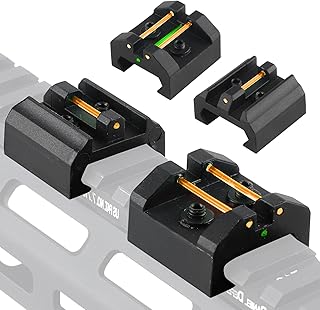
The ZR-L2 is designed for quick mounting on Picatinny or Weaver rails, enabling a fast upgrade to a low-profile sight system. It features a lightweight, ultra-low body that minimizes obstruction during deployment and target acquisition. The sight uses green and red optical fibers to enhance visibility in diverse lighting, supporting faster index and alignment in high-stress situations. Users benefit from easier handling while keeping other devices unobstructed on the rail, making it suitable for covert or compact setups.
Low Baseline Fiber Optic Sight Front And Rear Sight

The Low Baseline from TPRCOL emphasizes a straightforward setup on Picatinny rails, with dual-color fiber optics to boost visibility in varied light. The design prioritizes speed and accuracy, helping shooters quickly align targets without interference from other devices. This sight set is especially practical for compact or medium-sized tactical platforms where weight and space are at a premium.
Detachable Low Profile Front Tower for .223 5.56

This Detachable Low Profile Front Sight Tower is built for quick deployment and on-plane mounting with Picatinny/Weaver rails. It includes an A2 square post assembly to ensure compatibility across various front-sight configurations. It’s designed to align with the rear sight plane, enabling consistent sight picture without the need for disassembly. The front tower supports rugged usage across different gas block heights, enhancing field versatility.
Fiber Optic Iron Sights for Picatinny Rail

This flip-up pair takes up minimal rail space while delivering a crisp sight picture through fiber optic technology. Red and green fiber optics provide rapid recognition in diverse lighting, and the dual aperture design supports quick CQB transitions and long-range precision. The sights are fully adjustable for windage and elevation without tools and are compatible with most rifles and shotguns via mlok-compatible rails or standard Picatinny systems.
UTG Super Slim Flip-up Rear Sight

UTG’s Super Slim Flip-up Rear Sight is machined from matte black anodized aircraft aluminum for durability and a light profile. It features tool-free windage adjustment and dual aiming apertures to accommodate different engagement scenarios. The Posi-lock retention design helps prevent the sight tower from collapsing during use, ensuring consistent alignment when transitioning between targets or using other accessories on the rail.
Buying Guide
Choosing the right low-profile AR sights requires weighing several factors to match your rifle, mission, and shooting style. The following considerations help evaluate options across materials, mounting, and functionality:
- Rail compatibility: Confirm Picatinny or Weaver compatibility and ensure the sight height aligns with your optic setup to maintain a proper sight picture.
- Visibility and fiber optics: Green and red fiber optics improve daytime and low-light visibility. Consider ambient light conditions and the need for rapid target acquisition.
- Profile and height: Ultra-low bodies minimize obstruction but may reduce sight definition in some lighting. A balance between low height and adequate sight picture is crucial.
- Deployment method: Flip-up designs offer rapid deployment; fixed low-profile towers provide a consistent baseline. Choose based on how often you deploy or stow the sights.
- Durability and materials: Aluminum constructions with protective finishes resist corrosion and withstand recoil. Check retention mechanisms to avoid accidental collapse during use.
- Adjustability: Windage and elevation adjustments should be tool-free or easy to perform in the field if needed. Dual apertures can assist with CQB and precision shooting.
- Weight impact: Lightweight options help maintain overall rifle balance. Heavier sights may offer added durability but alter handling characteristics.
- Co-witness compatibility: For rifles with red dots or scopes, ensure the sights won’t obstruct the optic’s field of view or alignment.
- Maintenance: Fiber optics can degrade under heavy abuse; consider protective covers for harsh environments and easy cleaning routines.
- Multi-purpose use: If you foresee rapid target transitions with minimal rail space, flip-up iron sights with quick release or robust retention can be advantageous.
In summary, the best low-profile sights balance a minimal footprint with reliable visibility and fast deployment. Depending on your platform, you may prioritize a completely detachable front sight, or a compact flip-up pair that sits flush with the rail. Consider how the sight interacts with optics, your typical engagement range, and how tactically versatile you need the setup to be. The right choice will improve readiness without compromising the rifle’s sleek, understated silhouette.