For riders who prioritize distance without frequent charging, choosing an electric bicycle with a true long-range capability is essential. This guide highlights five top options that balance battery capacity, motor power, and ride comfort to maximize miles per charge. Each pick is evaluated on range, performance, and notable design features to help you compare effectively and choose the best fit for daily commuting, weekend adventures, or all-terrain exploration.
| Product | Battery / Range | Motor Power | Tire Type | |
|---|---|---|---|---|
| TST Electric Bike for Adult | 60 miles per charge | 1500W peak | 20″ x 4″ fat tires | Dual suspension |
| 2026 eAhora Juliet Pro 2 EBike | Up to 200 miles (60V 60Ah) | 1000W (peak 1200W) | 20″ fat tires | Front fork and dual rear suspension |
| ANIIOKI Electric Bike for Adults | 200+ miles | Not specified in listing | All-terrain tires | Not specified |
| D2 5000W Peak Dual Motor Electric Bike | 85+ miles | 5000W peak dual motors | 26″ x 4″ fat tires | Full suspension |
| Heybike Electric Bike for Adults | Up to 50 miles | 1200W peak | 27.5″ tires | Front suspension |
Note: All information reflects typical claims or specifications listed by sellers. Real-world range varies with rider weight, terrain, assist level, weather, and battery condition. This guide emphasizes long-range potential as a core criterion for American riders seeking maximum miles per charge.
TST Electric Bike for Adult: Long Range and Power

The TST road electric bike is powered by a 1500W peak motor, with a typical output around 750W, enabling speeds up to 28 mph. Its removable battery supports up to 60 miles per charge, aligning with daily commuting needs. The battery has UL 2849 safety certification via SGS, indicating robust safety standards. Its 20″x4″ fat tires and dual suspension help absorb rough surfaces, providing stability and reduced rider fatigue on uneven roads.
2026 eAhora Juliet Pro 2 EBike: High-Capacity Long Range

The Juliet Pro 2 stands out with claims of up to 200 miles on a single charge, powered by a 48V 60Ah battery. The dual motor configuration (up to 1200W peak) is designed to deliver strong hill climbs and confident highway acceleration. It features adjustable front forks, dual rear suspension, and four-piston hydraulic brakes for controlled stopping. A full suite of comfort and convenience features, including cruise control and a sizable rear rack, supports long-range riding and commuting.
ANIIOKI Electric Bike for Adults

ANIIOKI offers an electric experience marketed for long-range commuting with a removable 70Ah battery, purportedly delivering 200+ miles per charge. The listing emphasizes its all-terrain readiness with a multi-gear, all-terrain design suitable for diverse environments. The exact motor peak power and suspension details are not clearly specified in the provided listing, but the bike targets extended-range riders seeking high endurance on mixed surfaces.
D2 5000W Peak Dual Motor Electric Bike

The D2 model emphasizes high power with a 5000W peak dual motor setup, delivering 85+ miles of range per charge. Its 26″x4″ fat tires and full suspension are suited for off-road and all-terrain use, enhancing ride stability on tough trails. Hydraulic brakes contribute to precise stopping power. This configuration targets riders seeking strong performance and long-range capability for challenging routes and weekend explorations.
Heybike Electric Bike for Adults
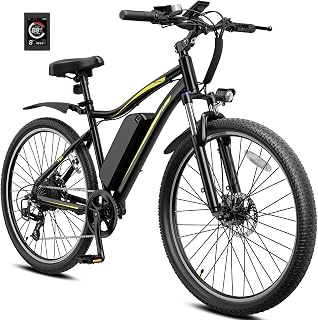
Heybike’s model offers a 1200W peak motor with up to 50 miles of range per charge. It uses 27.5″ tires and a front suspension setup, balancing ride comfort and efficiency for everyday commuting and light trail use. While the stated range is shorter than some other options, its balance of power, ride feel, and removable battery design remains attractive for riders prioritizing a flexible, all-around e-bike with reasonable long-range potential.
Buying Guide: Long-Range Electric Bicycles
- Battery Capacity and Range: Look for larger amp-hour (Ah) ratings and voltage (V) to estimate range. Removable batteries can extend versatility and lifespan by allowing charging in multiple locations.
- Motor Power and Efficiency: Higher wattage can improve climbing ability and speed but may reduce range if used aggressively. Consider motor type (hub vs. mid-drive) and peak vs. continuous power ratings.
- Frame and Suspension: Full or dual suspension improves comfort on rough terrain, which can help maintain efficiency by reducing rider fatigue. Fat tires offer traction on loose surfaces but can affect rolling resistance.
- Weight and Build Quality: Heavier bikes may lower range due to extra drag and motor load but can provide stability. UL-certified components and robust frame geometry contribute to long-term reliability.
- Intended Use: Commuting, off-road, or mixed-terrain riding informs which combination of range, speed, and suspension matters most. Battery placement and accessibility can influence daily practicality.
- Maintenance and Accessories: Consider included racks, lighting, and integrated displays. Removable batteries and modular parts can simplify maintenance and upgrades.
- Cost of Ownership: Higher-range bikes often involve higher upfront costs but can reduce charging frequency and downtime. Evaluate warranty terms and service availability in your area.
When evaluating long-range e-bikes, compare real-world range tests and rider-weight scenarios. Also consider charging infrastructure, as some models support fast charging or multiple charging options to maximize uptime on a busy schedule.