Finding a reliable decline sit up bench can elevate core workouts, support heavier lifting, and improve overall form at home. The following selections emphasize sturdy construction, adjustable settings, and comfort to suit a range of body types and training goals. Each option is designed to maximize ab development, incline variation, and safe positioning for daily use in a home gym.
| Product | Key Benefit | Max Weight Capacity |
|---|---|---|
| BODYWAKER Semi-Commercial Sit-Up Bench | Heavy‑duty stability with adjustable height | 800 lbs |
| FF Finer Form Semi-Commercial Decline Sit Up and Flat Bench | 2‑in‑1 versatile bench; strong frame | 1100 lbs |
| FF Finer Form Gym-Quality Adjustable Sit Up Ab Bench | Extended backrest for tall users | 660 lbs |
| Valor Fitness Decline Sit‑Up Bench | 20° fixed decline with ergonomic seating | 650 lbs |
| MARCY Apex Utility Bench Slant Board | Durable slant board for diverse upper body work | Heavy‑duty steel frame |
These benches span a range of budgets and space requirements, with features like extra-long backboards, adjustable foot rollers, and heavy‑duty steel frames. Each product page links to a trusted retailer, offering real‑world performance data for home gyms. The following sections provide concise, objective overviews to help you compare options quickly and select the best fit for your training.
BODYWAKER Semi-Commercial Sit-Up Bench

The BODYWAKER bench uses commercial-grade steel to deliver a robust platform that holds up to 800 pounds. This stability supports intense ab workouts and resistance training at home. A key feature is its fully adjustable configuration, including a customizable foot roller to fit users by height and weight. Comfort is enhanced by an extended backboard, which provides extra support for taller athletes during decline sit-ups and presses. The design emphasizes safety and long‑term durability for frequent use.
FF Finer Form Semi-Commercial Decline Sit Up and Flat Bench

This bench combines decline and flat configurations, allowing efficient shifts between ab work and classic bench presses. It offers semi‑commercial stability with a heavy‑duty steel frame and a high weight capacity, enabling ambitious workouts. A major advantage is the fully customizable setup, including an adjustable foot roller to accommodate different body builds. The design aims to balance versatility with solid footing, making it a practical centerpiece for varied home gym routines.
FF Finer Form Gym-Quality Adjustable Sit Up Ab Bench
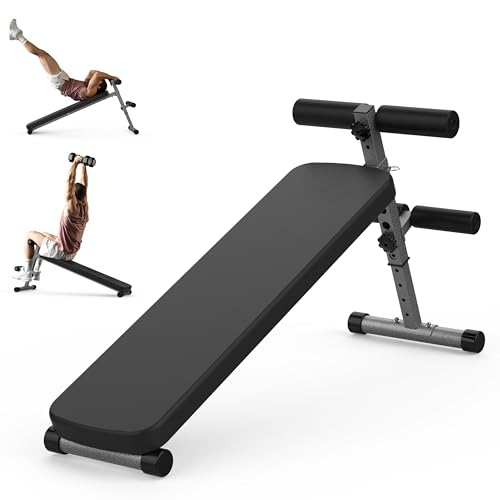
This model emphasizes an extended backrest to accommodate taller users, reducing the feel of crowding on long sessions. It supports a wide range of decline positions to vary intensity and target different portions of the core. The bench is built to endure heavy loads, with a stable base that minimizes wobble during sit-ups, weighted crunches, and decline presses. Its adaptability makes it suitable for an aggressive home‑gym schedule.
Valor Fitness Decline Sit-Up Bench
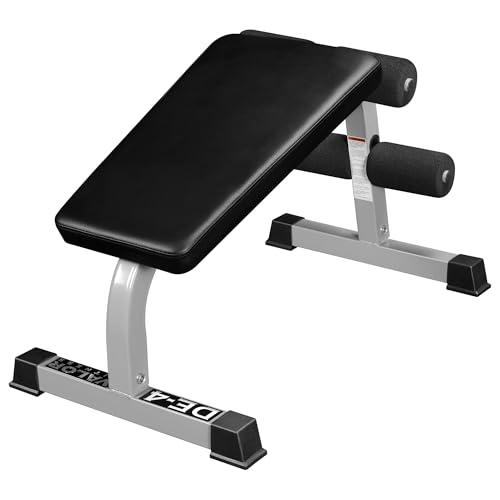
The Valor Fitness bench offers a 20° fixed decline with a padded seat that targets upper and lower abs while helping the torso remain aligned. With a suggested user height limit and a robust 650 lb max load, this model is designed to stay steady during crunches, twists, and leg‑raise combinations. Its compact footprint suits smaller home gyms without sacrificing core training potential, making it a practical choice for balance between space and effectiveness.
MARCY Apex Utility Bench Slant Board

The MARCY slate focuses on durability and upper body training with a slant board suitable for sit-ups, crunches, and decline presses. Its heavy‑duty steel construction ensures long‑lasting stability through everyday workouts. The extra-long padded backboard adds comfort and confidence, reducing the risk of poor form during extended ab sessions. This bench blends solid build quality with a straightforward design, suitable for users seeking reliable performance in a compact form factor.
Buying Guide: Key Purchase Considerations
When selecting a decline sit up bench, consider construct‑level stability, weight capacity, and adjustability. A heavier frame generally offers better stability during dynamic movements like weighted sit-ups or decline presses, reducing wobble and improving safety. Look for benches with adjustable foot rollers or leg supports to accommodate varied heights and ensure comfortable knee and ankle alignment.
Backrest length and padding are critical for comfort, particularly for taller users. An extended backboard helps maintain proper posture and reduces fatigue during longer sessions. The range of decline angles matters for targeting different abdominal regions, so a bench offering multiple incline positions or a fixed but ergonomic angle can support a broader range of exercises.
Versatility is another important factor. Some benches function as both decline sit up benches and flat benches, enabling a broader set of exercises beyond core work. Weight capacity should align with your current strength level and progress goals; higher capacities (e.g., 1100 lbs) typically indicate sturdier construction and longer usable life. Finally, consider space requirements and assembly when evaluating models for a home gym.
From a performance perspective, users should balance price, build quality, and long‑term reliability. Benches with reinforced frames, non‑slip upholstery, and secure locking mechanisms typically deliver safer, more consistent results. For those prioritizing comfort, models with thick padding and extended backrests are worth prioritizing, especially for taller athletes or longer training sessions.