Choosing the right baseball field fence screen can boost safety and effectiveness during batting and pitching practice. This guide highlights five top options that balance durability, portability, and value for American backyards, local fields, or training facilities. Each pick is evaluated on frame strength, net quality, ease of setup, and stability to help players and coaches train with confidence.
| Product | Brand | Size | Best Use | Key Benefit |
|---|---|---|---|---|
| CHAMPRO Steel Frame Field Screen | CHAMPRO | 10′ x 10′ | Backstop & Drills | All-weather durability |
| Skywalker L Screen | Skywalker Sports | 7′ x 7′ | Batting Practice | Lightweight, portable |
| PodiuMax 7×7 Pitching Screen | PodiuMax | 7′ x 7′ | Pitching & Hitting | Heavy-duty frame with stability |
| ZELUS 12×9 Barricade | ZELUS | 12′ x 9′ | Large Training Space | Massive protection area |
| Armor 7×7 L Screen | Better Baseball | 7′ x 7′ | Protective Cage | Double-layer netting |
Below are five carefully chosen options that fit common backyard and field setups, along with practical notes to help you compare at a glance.
CHAMPRO Steel Frame Field Screen

Size and build: The CHAMPRO Infield Screen uses an 18-gauge 1.5-inch steel frame, designed for durability across drills and practice sessions. The 10′ x 10′ footprint creates a broad protective area for pitchers and batters alike. Netting attaches with bottom straps for a secure fit, withstands repeated impact, and deflects balls effectively. The design supports versatile uses—from batting cages to field drills, and it can serve as a portable backstop in many settings.
Key features: 18-gauge steel frame; weatherized 45-ply PE net; bungee-strap attachment; adaptable for drills and as a backstop. The combination of a sturdy frame and multi-purpose netting supports both single and team training environments, while the 10×10 size offers ample protection without excessive bulk.
Skywalker L Screen

Size and build: This 7′ x 7′ L Screen features a powder-coated steel frame and UV-treated netting, designed for long wear in outdoor training. It emphasizes a balance of protection and portability, making it suitable for many practice spaces, parks, or home yards.
Key features: Durable steel frame; UV-protected netting; lightweight enough to move between locations; quick setup with included hardware. The net slips over the frame for a secure, fast assembly, supporting quick sessions with minimal setup time.
PodiuMax 7×7 Pitching Screen
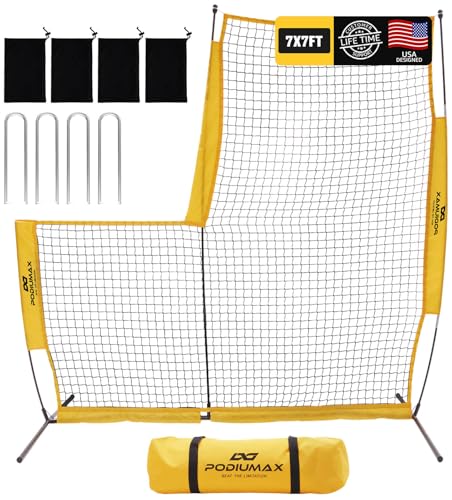
Size and build: A robust 7×7 foot L-screen with a 3.5×3.5 foot window for easy pitching, built from 7-ply mesh designed to resist high ball speeds up to 125 MPH. The frame uses thickened fiberglass poles and galvanized steel pipes for weather resistance and stability, ensuring that the screen remains upright under heavy use and wind.
Key features: 3.5 ft by 3.5 ft window; 125 MPH tested; thickened frame components; wider base for stability; includes ground anchoring options for outdoor use. This makes it well-suited for heavy-duty practice with pitchers and hitters requiring reliable protection.
ZELUS 12×9 Barricade Backstop

Size and build: An expansive 12×9-foot barrier net with a sturdy frame, designed to protect players and surroundings across multiple sports including baseball, softball, and rugby-style drills. The frame’s increased thickness adds rigidity for dependable practice sessions.
Key features: 7-ply knotless netting; heavy-duty frame; quick setup and breakdown; sizable hitting surface for practice. Its fold-up design facilitates easy transport and storage, making it a practical choice for seasonal training with limited space.
Armor 7×7 L Screen

Size and build: A 7′ x 7′ L Frame with a 15-gauge black powder-coated steel frame supports a double-layer pillowcase netting for added durability and extended life in outdoor use. This design emphasizes protective performance for pitchers and hitters during intense sessions.
Key features: 15-gauge steel frame; UV-treated poly netting; double-layer pillowcase netting; strong protection with straightforward setup. The combination aims to deliver reliable security during both batting and pitching practice in varied weather.
Buying Guide
Key purchase considerations
- Size and coverage: Match the screen footprint to your space. Larger screens provide more protection but require more storage and setup time.
- Frame material and durability: Look for steel or reinforced aluminum frames with rust-resistant coatings for outdoor use and season-long performance.
- Netting quality: Multi-ply or UV-treated nets last longer and resist weathering and wear from high-velocity balls.
- Portability and storage: If you move between locations, prioritize lighter frames with simple assembly or foldable designs and included carrying options.
- Stability features: Bases, wider footprints, sandbags, or ground anchors help prevent tipping during strong winds or high-impact practice.
- Versatility: Consider whether you need the screen to double as a backstop, a divider for drills, or a dedicated pitching screen for a batter’s box.
Comparative considerations
- Backstop vs. L-Screen: L-screens focus on personal protection for pitchers, while backstops provide larger hitting areas for multiple players and drills.
- Portability vs. stability: Ultra-portable models are convenient for parks and yards but may sacrifice some stability; heavier frames with anchors deliver robust protection but are less mobile.
- Weather resistance: In outdoor environments, choose weatherized nets and powder-coated frames to extend life through seasons.
- Intended user level: For youth leagues or home use, lighter frames with easier setup may suffice; for professional training, prioritize heavy-duty frames and high-quality nets.
Each option above offers different strengths. When selecting, align the screen’s size, frame durability, and net quality with your typical training sessions, space constraints, and whether the unit will be used alone or with a group. The right screen helps protect players and surroundings while enabling consistent, focused practice sessions.