For players looking to optimize bat speed, hand-eye coordination, and pitching accuracy, a 35-foot batting cage offers ample space for controlled drills without needing a full field. The following selections are designed to fit backyards, schools, and training facilities, balancing durability, safety, and value. This guide highlights key features, setup considerations, and how each setup supports solo and group practice.
| Product | Length | Use Case |
|---|---|---|
| 33ft Baseball Batting Cage with Frame and Net | 33 ft | Backyard batting and pitching practice |
| Baseball Batting Cage Nets (35 ft option) | 35 ft | Backyard and indoor nets (netting only) |
| VEVOR Baseball Batting Cage | 35 ft | Solo or team training |
| 8x8x20 / 10x10x35 / 12x12x55ft Net | 35 ft | Net only option for various sizes |
| Batting Cage Net (35 ft variants) | 35 ft | Portable netting system |
33ft Batting Cage With Frame And Net

Product features include a spacious 33 ft long by 12 ft wide enclosure with an 8 ft height and a 1.25-inch mesh grid. The polyester net with Oxford cloth seams and sturdy fiberglass poles support repeated training. The full enclosure helps keep balls inside the designated area, enhancing safety for both batting and pitching drills. A buttoned side opening provides easy entry and exit, making it suitable for solo practice or small group sessions in backyards, school fields, or practice areas. This cage favors versatility, enabling batting and pitching drills without needing a larger field.
Baseball Batting Cage Nets, 35′ Netting

This option provides 35-foot netting designed for backyards and indoor setups. The product emphasizes long-lasting value with HDPE #42 netting rated for outdoor use beyond five years, and a convenient door to facilitate entry and exit without lifting the net. The design includes a climbing buckle for door closure and compatibility with a wire hanging kit (sold separately). It’s ideal for creating a reliable, enclosed practice space for batting and pitching when you already have or plan to add a frame.
VEVOR Baseball Batting Cage

VEVOR offers a full-sized, freestanding batting cage measuring 35.0 x 10.5 x 10.2 ft. The full enclosure prevents balls from flying out, suitable for indoor and outdoor use. The cage uses thick HDPE netting with a 1.89-inch (48 mm) mesh and reinforced edges with nylon sleeves to maintain shape and strength under repeated impact. The powder-coated steel frame provides durability in outdoor conditions, and the design supports both baseball and softball practice, accommodating solo or team training scenarios.
8x8x20 / 10x10x35 / 12x12x55ft Net Only Batting Cage
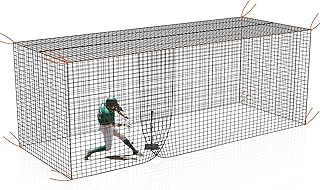
This option presents a 35-foot net without poles or a frame, making it a versatile choice for users who already own a frame or prefer customized installations. The kit includes a batting cage net, installation tool, and binding rope. The integrated side door can be closed to prevent balls from escaping, and the net uses 2.0 mm PE twisted rope with a 4.5 cm mesh to balance durability and performance. It supports baseball, softball, and other ball-based training activities in varied settings.
Batting Cage Net Portable 35ft

This product line features a 35-foot batting cage net with a portable design. It emphasizes a movable inner net system, enabling a two-lane layout for simultaneous practice. The system supports both solo and team training, with high-strength, weather-resistant knotless netting and UV protection for long-term outdoor use. Its versatility makes it suitable for backyards, fields, or indoor facilities where space optimization matters.
Buying Guide: Key Purchase Considerations
- Space and layout: Measure your available area. Decide between a freestanding cage with a frame or a net-only option to fit your location and whether you need a front/back entry.
- Durability and materials: Look for powder-coated steel tubes, UV-protected nets, and reinforced seams to handle repeated impact and outdoor exposure.
- Safety features: Full enclosure, door design, and secure anchoring reduce ball escape and protect players during batting and pitching drills.
- Netting density and mesh size: Finer meshes contain balls better; thicker nets tolerate higher impact. HDPE #42 and similar standards are common for long-term outdoor use.
- Versatility: Some cages offer movable inner nets or multiple length options (e.g., 35 ft, 55 ft, 70 ft) to adapt to different training needs and group sizes.
- Installation and maintenance: Consider whether you want a simple “net only” install or a full kit with poles, frames, and installation tools. Check for door closures and easy-entry features.
- Portability vs. permanence: Portable nets offer flexibility but may require reassembly; fixed frames provide stability but require more space and anchoring.
- Maintenance and weather resistance: Look for corrosion-resistant frames and nets that resist sun damage and moisture to extend life.
- Cost vs. value: Balance upfront cost with expected lifespan, maintenance needs, and how often you’ll use the cage for solo vs. group practice.